Open 24 Hours, 7 Days a Week · Spokane, WA & North Idaho
Water Damage Restoration — Spokane Area
24/7 emergency water extraction, flood cleanup, and structural drying across Spokane County and Kootenai County. Call right now to speak with local restoration help.
When water starts pouring through a ceiling, pooling across a finished basement, or backing up from a floor drain, every hour matters. Standing water soaks into drywall, carpet padding, baseboards, and subflooring far faster than most homeowners expect. What looks like a puddle on the surface often spreads underneath cabinets, down wall cavities, and across timber framing long before you see a stain.
1st Response Water Damage connects homeowners and property managers across Spokane, WA and North Idaho with emergency water damage restoration crews who respond day and night. Whether a winter freeze just split a supply pipe, spring snowmelt pushed water through your basement window wells, or a water heater ruptured overnight, one phone call gets experienced help moving toward your property.
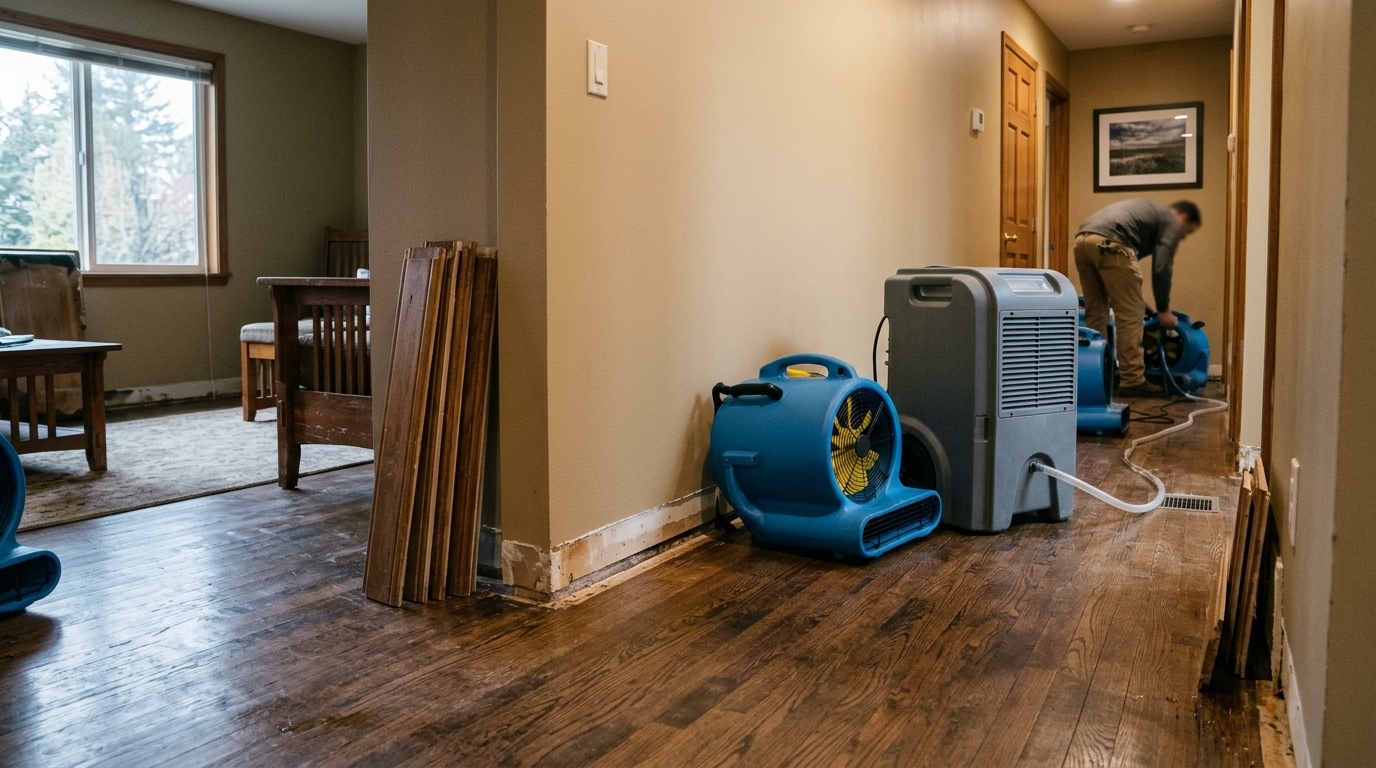
You do not have to guess what to tear out or worry about missing hidden moisture behind your walls. Local restoration technicians bring truck-mounted extractors, moisture meters, thermal cameras, commercial air movers, and high-capacity dehumidifiers designed to stabilize the building and dry the structure thoroughly so you can get life back to normal.
What Is Included in Emergency Water Damage Restoration
Every water emergency is different, depending on where the water came from and how long it sat in the structure. Full-scope water damage restoration covers every step from stopping spread to final rebuild readiness:
01.
Emergency Water Removal and Water Extraction
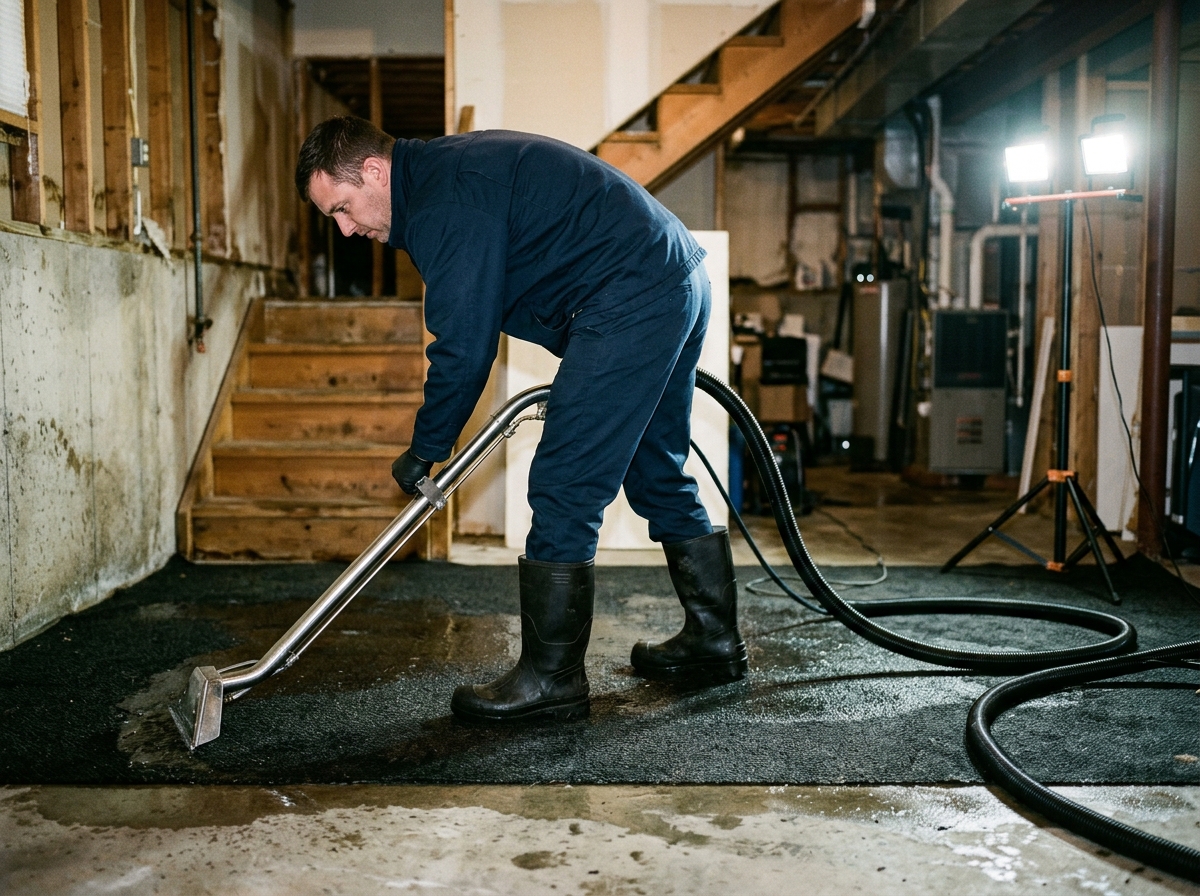
High-powered submersible pumps, weighted carpet extractors, and truck-mounted vacuums pull hundreds of gallons of standing water out of floors and basements quickly. Physical extraction removes far more moisture in the first hour than air drying alone ever could.
02.
Flood Damage Cleanup
When snowmelt, heavy storms, or overland runoff enters a property, crews remove silt and debris, isolate affected zones, sanitize surfaces exposed to outdoor water, and establish controlled airflow to protect framing and finishes.
03.
Burst Pipe and Leaking Pipe Water Damage
Cold snaps in Eastern Washington and North Idaho frequently freeze lines in exterior walls, crawl spaces, and garages. Once your plumber or shut-off stops the active leak, restoration teams remove saturated insulation, open wet wall cavities as needed, and dry framing before warping or secondary damage develops.
04.
Basement Flooding Cleanup
Lower levels collect water from failing sump pumps, hydrostatic foundation pressure, clogged exterior drains, and overflowing appliances. Crews extract standing water, detach wet baseboards or damaged carpet pad, and monitor concrete slabs and sill plates until moisture levels normalize.
05.
Sewage Cleanup and Sanitation
Sewer line backups and toilet overflows carry harmful contaminants that require strict containment. Restoration teams safely extract waste water, remove porous materials that cannot be cleaned, and apply hospital-grade antimicrobial treatments across affected structural surfaces.
06.
Structural Drying and Dehumidification
Dry air and measured airflow do the heavy lifting after extraction. Commercial LGR dehumidifiers pull vapor out of indoor air while strategically angled air movers draw moisture from framing studs, joists, and subfloors, tracked daily with calibrated moisture meters.
07.
Water Damage Repair and Restoration
Once moisture logs verify the structure is completely dry, restoration continues into repair work—replacing removed drywall sections, re-securing trim, restoring damaged flooring, and returning rooms to pre-loss condition.
Why Homes Across the Spokane Metro Area Face Frequent Water Damage
Properties across Spokane, Spokane Valley, Liberty Lake, Airway Heights, Cheney, Coeur d’Alene, and Post Falls deal with a demanding four-season Inland Northwest climate. Prolonged sub-freezing winter stretches push frost deep into unheated crawl spaces, garage perimeters, and older exterior plumbing chases. Many burst pipes stay silent while frozen solid, then flood walls and ceilings the moment temperatures climb above freezing.
Late winter and spring bring a second wave of water emergencies. Heavy snowpack melting over still-frozen ground forces runoff against home foundations, window wells, and walkout basement patio doors. Homes near the Spokane River valley, sloped South Hill lots, terraced subdivisions in Liberty Lake, and Kootenai County properties near Lake Coeur d’Alene see recurring groundwater intrusion whenever drainage swales or sump pumps are overwhelmed.
Even in dry summer months, everyday household failures cause major indoor flooding. Aging water heaters, braided washing machine hoses, refrigerator ice-maker lines, dishwasher drains, and upstairs bathroom supply valves can release hundreds of gallons while a family is at work or asleep. Addressing both visible water and hidden wall-cavity moisture quickly prevents swollen hardwood, sagging ceilings, and stubborn odor problems.
How Our Water Damage Restoration Process Works
01.
Immediate Emergency Call and Assessment
Call our 24/7 line to explain what happened and where you are located. A local restoration crew reviews safety concerns, advises you on immediate shut-off steps, and prepares extraction and drying gear for your property.
02.
Water Extraction and Moisture Mapping
Technicians inspect the affected rooms with pin and pinless moisture meters and thermal imaging to trace every path water traveled under flooring and behind walls. Standing water is extracted immediately to halt migration.
03.
Controlled Structural Drying and Cleaning
Unsalvageable wet padding or soaked drywall sections are carefully removed if needed, surfaces are cleaned and sanitized, and commercial air movers and dehumidifiers run continuously with daily moisture checks.
04.
Final Dry Verification and Restoration
When readings match unaffected dry-standard areas of your home, equipment is removed, insurance documentation is organized, and final repairs restore your rooms cleanly.
The Three Categories of Water Damage (Clean, Grey, and Black Water)
Where water enters your home determines both safety precautions and how much flooring or drywall can be dried in place. Restoration technicians classify every loss into one of three contamination categories—and acting within the first 24 hours keeps clean water from degrading into contaminated water.
Category 1
Clean Water
Originates from sanitary supply lines, ruptured water heaters, or clean sink overflows. When extracted promptly, clean water offers the strongest chance of salvaging carpet, trim, and framing.
Category 2
Grey Water
Comes from dishwasher overflows, washing machine discharge lines, or sump backups containing mild contaminants. Requires pad removal, surface cleaning, antimicrobial treatment, and structural drying.
Category 3
Black Water & Sewage
Grossly contaminated water from sewer line backups, toilet overflows with solids, or outdoor floodwater and snowmelt runoff. Requires strict containment, porous tear-out, and thorough decontamination.
Reference Sources
- U.S. EPA — Mold, Moisture, and Your Home: Dry water-damaged areas and items within 24–48 hours to prevent mold growth.
- UGA Cooperative Extension: Flood moisture and porous building materials can support microbial growth starting within 24 hours if left wet.
Want to understand how each water category affects safety and drying? Read The Three Categories of Water Damage Explained.
What Homeowners Insurance Usually Covers for Water Damage
Most homeowners feel overwhelmed trying to figure out what their policy covers while water is still on the floor. Coverage in Washington and Idaho generally depends on whether the water intrusion was sudden and accidental—and whether it started inside your plumbing or came from outside your foundation.
Usually Covered
Sudden Burst Pipes & Appliance Ruptures
Standard policies typically cover sudden, accidental indoor water discharges—such as a frozen pipe burst (when normal heat was maintained) or a suddenly ruptured water heater.
Needs Endorsement
Sewer & Drain Backups
Water backing up from a main sewer lateral, basement floor drain, or overwhelmed sump pump generally requires a separate Water Backup or Sump Overflow add-on.
Separate Policy
Outdoor Floodwater & Surface Runoff
Rising creeks, overland storm runoff, or snowmelt entering from outside through window wells or foundations requires separate flood insurance coverage.
Usually Excluded
Gradual Leaks & Wear and Tear
Long-term dripping pipes, deteriorating shower seals, or deferred roof maintenance are commonly treated as gradual maintenance issues rather than sudden covered losses.
- Shut off the main water valve immediately if it is safe to reach.
- Turn off electricity to wet rooms if water is near outlets or floor cords.
- Take quick photos and video of standing water before moving soaked rugs or furniture.
- Start emergency extraction first to fulfill your policy duty to mitigate damage, then notify your insurer.
Looking for a fuller breakdown of Washington and Idaho water coverage rules? Read Does Homeowners Insurance Cover Water Damage?.
Fall Windstorms, Winter Ice Storms, and Cold-Snap Water Intrusion
Spokane and North Idaho experience powerful autumn windstorms and winter ice storms that knock tree limbs onto roofs, peel back shingles, and knock out neighborhood power lines. When storm-damaged roofs let rain or thawing snow leak into attics and ceilings—or when a power outage silences a basement sump pump—fast indoor water extraction and structural drying stop wet drywall and soaked insulation from worsening overnight.
During extreme Arctic cold snaps, keeping indoor heat steady protects vulnerable pipes inside exterior walls and crawl spaces. Once a roof leak or storm-related pipe break lets water indoors, emergency water restoration crews extract standing water and dry affected framing cleanly.
Reference Sources
- Insurance Institute for Business & Home Safety (IBHS): Keep indoor thermostats set to at least 55°F during freezing winter weather to help prevent frozen burst pipes.
Commercial Water Damage Restoration Across Spokane & North Idaho
Water emergencies in commercial buildings disrupt tenants, customers, and daily operations immediately. Local 24/7 water restoration crews respond to multi-unit apartment buildings in Browne’s Addition and Spokane Valley, downtown Spokane offices and retail storefronts, restaurants with burst kitchen supply lines, and commercial suites across Coeur d’Alene and Post Falls.
High-capacity truck-mounted extraction, commercial desiccant or LGR dehumidifiers, moisture mapping across multi-story corridors, and clear loss documentation help property managers and business owners stabilize buildings quickly and limit downtime.
Water Damage Restoration by Town
Select your city in Washington or Idaho for dedicated local restoration details.
Spokane County · ZIP 99201
Home base covering South Hill, North Side, Garland, Browne’s Addition, and surrounding neighborhoods.
Spokane County · ZIP 99216
Serving Opportunity, Veradale, Greenacres, Dishman, and homes along the Sprague and Trent corridors.
Spokane County · ZIP 99019
Serving Meadowwood, River District, Legacy Ridge, and lakefront residential neighborhoods.
Spokane County · ZIP 99001
Serving West Plains residential subdivisions and commercial properties along Highway 2.
Spokane County · ZIP 99004
Serving single-family homes, student rentals, and businesses throughout Cheney and the southwest plains.
Kootenai County · ZIP 83814
Serving Fort Grounds, Sanders Beach, Lake Coeur d’Alene shorelines, and Kootenai County neighborhoods.
Kootenai County · ZIP 83854
Serving Prairie Falls, Riverbend, Tullamore, and residential communities along the Spokane River.
Frequently Asked Questions
Open 24 Hours, 7 Days a Week · Spokane County, WA & Kootenai County, ID
Stop Water Damage Before It Spreads Further
Water and fire damage worsen every hour. Call our 24/7 line to speak directly with local restoration help serving Spokane and North Idaho.